
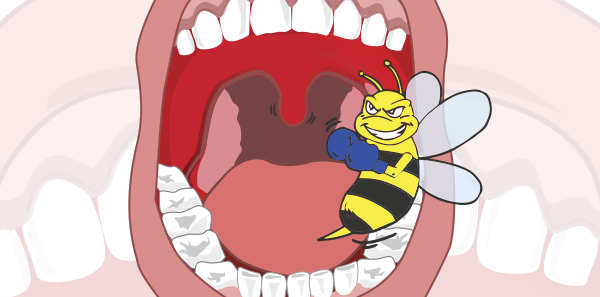
Hymenoptera stings cause more deaths in the United States than any other envenomation. Reactions range from a local inflammatory response to full-blown anaphylaxis.2 Bee stings to the oropharynx, especially the uvula, are exceedingly rare.3,4 Clinicians should have increased suspicion of airway compromise and be exceedingly conservative in the management of oropharyngeal hymenoptera stings because even a local reaction can cause significant airway compromise. It is crucial to perform a careful pharyngeal exam, and it is prudent to remove the stinger if possible.
Explore This Issue
ACEP Now: Vol 36 – No 03 – March 2017It is important to emphasize that any patient presenting with anaphylaxis, hypotension, bronchospasm, or tracheo-laryngeal edema (not from direct sting to the area, as in my case) should be referred for venom immunotherapy (VIT).5 This is also true of adolescents older than 16 who present with urticaria or angioedema.5 VIT has been effective in reducing the allergic response in subsequent venom exposures, which can be lifesaving.6
Case Resolution
I never ended up checking into the emergency department. After curbsiding one of my colleagues for a quick exam, I felt silly wasting their time. I thought to myself, “What would I do for a similar patient without anaphylaxis? Diphenhydramine, ranitidine, steroids, maybe epinephrine, and probably admission for observation?” I had a night shift later that evening and didn’t want to be admitted or receive any medications that would require my being observed.
My symptoms were stable. I worked my night shift without any symptoms except for a sore throat and a funny-sounding voice.
Needless to say, this experience could have been much worse. If I were allergic to bees, I don’t know that I would have made it home without airway collapse. I also don’t recommend the treatment option I chose. I know that emergency physicians are very stoic and wait until the last possible moment to seek treatment, but although we can manage almost any condition, I think it is equally important to know when to let someone help you.
 Dr. Podolej is in the department of clinical emergency medicine at the University of Illinois College of Medicine at Peoria and a simulation and medical education fellow at the Jump Trading Simulation & Education Center in Peoria.
References
- Viswanathan S, Iqbal N, Shanmugam V, et al. Odynophagia following retained bee stinger. J Venom Anim Toxins Incl Trop Dis. 2012;18(2):253-255.
- Tome R, Somri M, Teszler CB, et al. Bee stings of children: when to perform endotracheal intubation? Am J Otolaryngol. 2005;26(4):272-274.
- Smoley BA. Oropharyngeal hymenoptera stings: a special concern for airway obstruction. Mil Med. 2002;167(2):161-163.
- Kraiwattanapong J. Uvula bee sting: a case report. Siriraj Med J. 2016;68(3):187-190.
- Mikals K, Beakes D, Banks TA. Stinging the conscience: a case of severe hymenoptera anaphylaxis and the need for provider awareness. Mil Med. 2016;181(10):e1400-e1403.
- Boyle RJ, Elremeli M, Hockenhull J, et al. Venom immunotherapy for preventing allergic reactions to insect stings. Cochrane Database Syst Rev. 2012;10:Cd008838.
Pages: 1 2 3 | Single Page




2 Responses to “Airway Compromise a Risk With Oropharyngeal Hymenoptera Stings”
April 10, 2017
Peter W Vann, MDGutsy removing your own bee stinger – I know I couldn’t have done it, as I choke on the photons from the light. Plus my eyesight isn’t what it used to be (and it was never excellent). – PWV, 67yo retired EP
September 7, 2021
Shahram AfrasiabiThis exact thing happened to me yesterday while running on trail with my mouth open. A wasp flew into the back of my throat. My throat looked exactly like the one in the picture with swollen uvular. I went to emergency in case and they gave me a dose of Benadryl shot. I also took some sour throat syrup at home. Today morning all symptoms are almost gone.