
Report Card Q&A
With Jon Mark Hirshon, MD, MPH, PhD, FACEP
Explore This Issue
ACEP Now: Vol 33 – No 02 – February 2014Q: How often does ACEP release a report card?
JMH: ACEP has produced Report Cards in 2006 and 2009 to evaluate the overall emergency care environment both nationally and on a state-by-state basis. This is not a report on the emergency care delivered in any specific hospital or by any individual physician but rather an evaluation of how well the country supports emergency care.
Q: What does the report card measure?
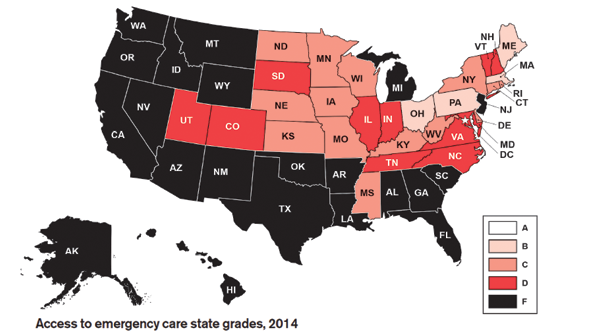
JMH: The 2014 Report Card is based on 136 objective measures in five areas: Access to Emergency Care (30 percent), Quality & Patient Safety (20 percent), Medical Liability (20 percent), Public Health & Injury Prevention (15 percent), and Disaster Preparedness (15 percent).
Q: What do the data include?
JMH: Results reflect the most recent data available from sources such as the Centers for Disease Control and Prevention, National Highway Traffic Safety Administration, Centers for Medicare & Medicaid Services, and American Medical Association Additionally, two surveys were sent to state health officials.
Q: How does ACEP use the data to improve health care?
JMH: Since 2006, ACEP chapters have used the Report Cards to help with the establishment of new emergency medicine residency programs, support the funding of a statewide trauma system, help with the enactment of liability protection for federally mandated EMTALA-related care, and increase awareness of emergency medicine issues among state and national lawmakers. The 2014 Report Card will be used to educate policymakers and the public about the pivotal role of emergency medicine, help change the conversation from preventing “expensive” emergency visits to protecting access to emergency care, and develop communications tools to achieve the national and state recommendations of the Report Card in order to improve the emergency-care environment.
 Dr. Hirshon is board certified in both emergency medicine and preventive medicine and has authored approximately 75 articles and chapters on various topics, including the development of public health surveillance systems in emergency departments and placing emergency care on the global health agenda. He has a doctorate in epidemiology and is a federally funded researcher and teacher with specific interest in improving access to acute care and in developing emergency departments as sites for surveillance and hypothesis-driven research in public health.
Pages: 1 2 3 | Single Page


No Responses to “ACEP’s 2014 Report Card on Emergency Medicine Reveals Major Access-to-Care Deficit”