Logo

Log In Sign Up |  An official publication of: American College of Emergency Physicians
Navigation
  • Home
  • Multimedia
    • Podcasts
    • Videos
  • Clinical
    • Airway Managment
    • Case Reports
    • Critical Care
    • Guidelines
    • Imaging & Ultrasound
    • Pain & Palliative Care
    • Pediatrics
    • Resuscitation
    • Trauma & Injury
  • Resource Centers
    • mTBI Resource Center
  • Career
    • Practice Management
      • Benchmarking
      • Reimbursement & Coding
      • Care Team
      • Legal
      • Operations
      • Quality & Safety
    • Awards
    • Certification
    • Compensation
    • Early Career
    • Education
    • Leadership
    • Profiles
    • Retirement
    • Work-Life Balance
  • Columns
    • ACEP4U
    • Airway
    • Benchmarking
    • Brief19
    • By the Numbers
    • Coding Wizard
    • EM Cases
    • End of the Rainbow
    • Equity Equation
    • FACEPs in the Crowd
    • Forensic Facts
    • From the College
    • Images in EM
    • Kids Korner
    • Medicolegal Mind
    • Opinion
      • Break Room
      • New Spin
      • Pro-Con
    • Pearls From EM Literature
    • Policy Rx
    • Practice Changers
    • Problem Solvers
    • Residency Spotlight
    • Resident Voice
    • Skeptics’ Guide to Emergency Medicine
    • Sound Advice
    • Special OPs
    • Toxicology Q&A
    • WorldTravelERs
  • Resources
    • ACEP.org
    • ACEP Knowledge Quiz
    • Issue Archives
    • CME Now
    • Annual Scientific Assembly
      • ACEP14
      • ACEP15
      • ACEP16
      • ACEP17
      • ACEP18
      • ACEP19
    • Annals of Emergency Medicine
    • JACEP Open
    • Emergency Medicine Foundation
  • About
    • Our Mission
    • Medical Editor in Chief
    • Editorial Advisory Board
    • Awards
    • Authors
    • Article Submission
    • Contact Us
    • Advertise
    • Subscribe
    • Privacy Policy
    • Copyright Information

ACEP Revises Venous Thromboembolism Clinical Policy

By Stephen J. Wolf, MD, FACEP | on July 17, 2018 | 2 Comments
Features
  • Tweet
  • Click to email a link to a friend (Opens in new window) Email
Print-Friendly Version
ILLUSTRATION: shutterstock.com

You Might Also Like
  • Thoracic Aortic Dissection Clinical Policy Approved by ACEP Board
  • ACEP Revises Clinical Policy on Procedural Sedation and Analgesia in the Emergency Department
  • ACEP Refines Its Clinical Policy on Psychiatric Boarding
Explore This Issue
ACEP Now: Vol 37 – No 07 – July 2018

ILLUSTRATION: shutterstock.com

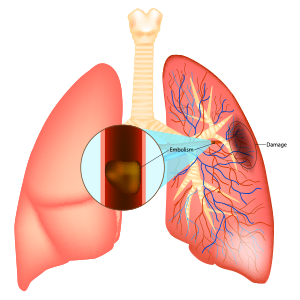
In February 2018, the ACEP Board of Directors approved a revised clinical policy on the evaluation and management of adult patients presenting with suspected acute venous thromboembolic disease.1 The policy is available at www.acep.org/patient-care/clinical-policies.

Venous thromboembolism (VTE), including both deep venous thrombosis (DVT) and pulmonary embolism (PE), is a major public health problem. Undiagnosed, untreated patients are believed to be at substantial risk for progressive disease and sudden death typically because of worsening right-sided heart strain and ultimately cardiovascular collapse. Treated patients are at risk for chronic sequelae (ie, vein scarring, leg swelling, and pulmonary hypertension) and adverse events from ongoing anticoagulation (ie, hemorrhage and other medication adverse effects).

One significant challenge for health care providers evaluating patients for VTE lies in the variability of signs and symptoms of the disease that are related to clot burden, location, and the individual patient’s cardiopulmonary reserve. Without perfect, cost-effective tests for the diagnosis of VTE, providers have come to rely on Bayesian decision making to guide their workup, using pretest probability to interpret diagnostic evaluations and generate posttest probability of disease. Doing this allows providers to maximize diagnostic accuracy while minimizing over-testing and patient harm from the risks associated with unnecessary evaluation and treatment.

Table 1. Translation of Classes of Evidence to Recommendation Levels

Table 1. Translation of Classes of Evidence to Recommendation Levels

Efforts to refine this Bayesian approach in emergency medicine have been ongoing. Original studies to determine pretest probability and the accuracy of various screening tests have been validated, and the limits of their efficacy are being explored. Additionally, substantial efforts are being made to advance the treatment of VTE by balancing outcomes, anticoagulation risks to patients, and patient preferences. Non–vitamin K antagonist oral anticoagulants (NOACs) are particularly appealing for long-term anticoagulation because of their simple oral dosing regimens with no need for routine laboratory monitoring.

This most recent revision investigates five areas of interest or controversy in the evaluation and management of VTE. The first two critical questions address the role of unique clinical prediction rules and age-adjusted D-dimer testing in the diagnosis of PE, and the remaining three questions focus on optimal treatment and disposition for individuals receiving a diagnosis of venous thromboembolic disease.

For each critical question, a structured literature review was performed, evidence was systematically graded (see Table 1), and evidence-based recommendations are presented.

Critical Questions

Question 1. In adult patients with suspected acute PE, can a clinical prediction rule be used to identify a group of patients at very low risk for the diagnosis of PE for whom no additional diagnostic workup is required?

Pages: 1 2 3 | Single Page

Topics: ACEPAmerican College of Emergency PhysiciansClinical GuidelineGuidelinesVenous Thromboembolism

Related

  • ACEP Clinical Policy on Thrombolytics for Management of Acute Ischemic Stroke

    July 3, 2025 - 0 Comment
  • ACEP Clinical Policy on Outpatient Mgmt. of Adults with Asymptomatic Elevated Blood Pressure

    June 25, 2025 - 0 Comment
  • New Clinical Policy for Adult Patients with Acute Carbon Monoxide Poisoning

    May 7, 2025 - 0 Comment

Current Issue

ACEP Now: November 2025

Download PDF

Read More

2 Responses to “ACEP Revises Venous Thromboembolism Clinical Policy”

  1. August 4, 2019

    Erik Auf der Heide, MD, FACEP Reply

    This policy needs to define:
    1) all acronyms
    2) low, intermediate, and high risk

    • August 6, 2019

      Dawn Antoline-Wang Reply

      Please visit https://www.acep.org/patient-care/clinical-policies/ to download the full policy.

Leave a Reply Cancel Reply

Your email address will not be published. Required fields are marked *


*
*


Wiley
  • Home
  • About Us
  • Contact Us
  • Privacy
  • Terms of Use
  • Advertise
  • Cookie Preferences
Copyright © 2025 by John Wiley & Sons, Inc. All rights reserved, including rights for text and data mining and training of artificial technologies or similar technologies. ISSN 2333-2603