

Vote. That’s the bare minimum, says North Carolina State Representative and ACEP member Timothy Reeder, (R-D9), MD, FACEP.
Explore This Issue
ACEP Now May 03When he’s not actively pushing for laws in North Carolina that make positive changes in health care, or still working full time in the ED, Dr. Reeder encourages emergency physicians to get involved in advocacy efforts, meet with legislators at the state and federal level, donate money, and run for office. But voting comes first, and it’s the foundation of his Hierarchy of Advocacy argument. It sounds basic enough, but Dr. Reeder says you would be surprised.
“Physicians have to vote, that’s the baseline, and we know that physicians actually vote less than the general population,” Dr. Reeder said. The importance of voting is clear as he won his first race by 354 votes out of more than 30,000 cast. “If 12 people at each precinct had voted the other way, I would not have been elected.”
To improve physician advocacy success, Dr. Reeder breaks it down.
His presentation includes a pyramid to show where to start and where to go. Dr. Reeder delivers his Hierarchy of Advocacy talk whenever time permits, from medical students, resident and attending physicians, other health care professionals, and any others who will listen to improve their advocacy skills. This road map to successful advocacy starts small—voting—and leads to a candidacy for public office, something Dr. Reeder never really thought would happen to him until it did. Although he was active in advocacy and health policy on the Board and as President of the North Carolina Medical Society, he did not envision running for office. That changed with a phone call on October 25, 2021, when a former NC House of Representative, an anesthesiologist, called to tell him of the desperate need for a physician voice in the legislature and asked him to run for office.
Dr Reeder had one week to decide to change the course of his career. “As I did leadership training over the years, I said that leadership opportunities come when unexpected doors open up,” he said. “Now I had to face my own words and decide if I should follow my own advice.”
Here’s how the hierarchy works:
- Vote: The foundation of advocacy is participation in the electoral process. Dr. Reeder urges physicians to overcome apathy and recognize that every vote contributes to shaping policy.
- Develop Relationships with Legislators: Advocacy extends beyond the ballot box. Dr. Reeder compares the process of building relationships with policymakers to dating – physicians must cultivate connections over time, becoming trusted sources of expertise. “You want legislators to have your number saved in their phone. When somebody has a question related to health care, you need to be the person they call. Physicians are uniquely positioned to speak for patients. Make sure they call you.”
- Make Financial Contributions: While money does not buy votes, it does facilitate access. Dr. Reeder stresses that even modest political donations – $500 to $1,000 – can significantly support candidates aligned with health care priorities. He asks emergency physicians to “give a shift”—their salary for working one ED shift.
- Offer Campaign Support: Engagement deepens when physicians actively participate in campaigns, whether by hosting fundraisers, making phone calls, or knocking on doors. These efforts strengthen relationships and demonstrate a commitment to shaping policy.
- Run for Office: The pinnacle of advocacy is direct political involvement. Dr. Reeder’s own journey into the legislature exemplifies how physicians can bring their expertise into governance, ensuring that health care policy is informed by those who understand it best.
From Emergency Medicine to State Leadership
Dr. Reeder’s journey into medicine began with volunteer work in an emergency department during high school. Drawn to the fast-paced and diverse nature of emergency medicine, he pursued medical education at Ohio State University before completing his Master of Public Health at the University of North Carolina at Chapel Hill. His career at East Carolina University’s Brody School of Medicine and leadership roles in state medical organizations set the stage for where he is now.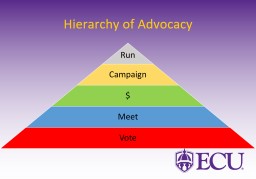
Pages: 1 2 3 | Single Page



No Responses to “ACEP Member, N.C. State Representative Explains Hierarchy of Advocacy”