Logo

Log In Sign Up |  An official publication of: American College of Emergency Physicians
Navigation
  • Home
  • Multimedia
    • Podcasts
    • Videos
  • Clinical
    • Airway Managment
    • Case Reports
    • Critical Care
    • Guidelines
    • Imaging & Ultrasound
    • Pain & Palliative Care
    • Pediatrics
    • Resuscitation
    • Trauma & Injury
  • Resource Centers
    • mTBI Resource Center
  • Career
    • Practice Management
      • Benchmarking
      • Reimbursement & Coding
      • Care Team
      • Legal
      • Operations
      • Quality & Safety
    • Awards
    • Certification
    • Compensation
    • Early Career
    • Education
    • Leadership
    • Profiles
    • Retirement
    • Work-Life Balance
  • Columns
    • ACEP4U
    • Airway
    • Benchmarking
    • Brief19
    • By the Numbers
    • Coding Wizard
    • EM Cases
    • End of the Rainbow
    • Equity Equation
    • FACEPs in the Crowd
    • Forensic Facts
    • From the College
    • Images in EM
    • Kids Korner
    • Medicolegal Mind
    • Opinion
      • Break Room
      • New Spin
      • Pro-Con
    • Pearls From EM Literature
    • Policy Rx
    • Practice Changers
    • Problem Solvers
    • Residency Spotlight
    • Resident Voice
    • Skeptics’ Guide to Emergency Medicine
    • Sound Advice
    • Special OPs
    • Toxicology Q&A
    • WorldTravelERs
  • Resources
    • ACEP.org
    • ACEP Knowledge Quiz
    • Issue Archives
    • CME Now
    • Annual Scientific Assembly
      • ACEP14
      • ACEP15
      • ACEP16
      • ACEP17
      • ACEP18
      • ACEP19
    • Annals of Emergency Medicine
    • JACEP Open
    • Emergency Medicine Foundation
  • About
    • Our Mission
    • Medical Editor in Chief
    • Editorial Advisory Board
    • Awards
    • Authors
    • Article Submission
    • Contact Us
    • Advertise
    • Subscribe
    • Privacy Policy
    • Copyright Information

Abdominal Compartment Syndrome in the Emergency Department
By Michael Gottlieb, MD, FAAEM; and Brit Long, MD, FACEP | on October 23, 2020 | 0 Comment
Features
  • Tweet
  • Click to email a link to a friend (Opens in new window) Email
Print-Friendly Version
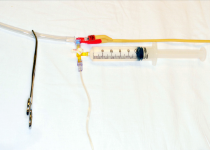
FIGURE 1A

You Might Also Like
  • Reader Suggests We Take a Team Approach to Compartment Syndrome
  • Tips for Quickly Diagnosing Compartment Syndrome
  • Studies Bolster Statin Use for Emergency Department Patients With Suspected Acute Coronary Syndrome
Explore This Issue
ACEP Now: Vol 39 – No 10 – October 2020

FIGURE 1A

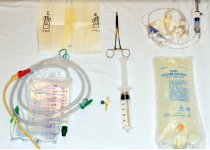
FIGURE 1B

FIGURE 1B

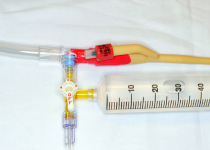
FIGURE 1C

FIGURE 1C
PHOTOS: Michael Gottlieb and Brit Long

Although multiple methods of IAP measurement have been proposed, intravesicular measurement generally preferred. As the name suggests, this measurement is obtained by placing a Foley catheter into the bladder. When measuring IAP, the patient should be supine and relaxed to avoid artificially increasing the IAP measurements.5,10 Ensure the patient’s pain is adequately controlled and measure the pressure at end-expiration.14 Clinicians should use warm saline to avoid detrusor muscle spasm, and no more than 25 mL of fluid should be instilled to avoid false elevations of IAP.14 ACS is defined as an IAP >20 mm Hg with evidence of organ dysfunction.14

Treatment of ACS focuses on improving end-organ perfusion by reducing IAP. This includes four main steps: 1) evacuating intraluminal and intraperitoneal contents, 2) improving abdominal wall compliance, 3) optimizing intravascular fluid therapy, and 4) early surgical consultation for possible surgical decompression.

Ileus and luminal distension are common in patients with ACS.15,16 Nasogastric or orogastric tubes can reduce gastric distension, while prokinetc agents (eg, metoclopramide, erythromycin) may help reduce intraluminal contents.14,17 Extraluminal pathologies (eg, ascites, hemoperitoneum, pneumoperitoneum) may also require drainage, which can be performed percutaneously or through operative drainage.18–20

Adequate analgesia and sedation should be provided because pain and sedation can further increase IAP. If the patient is intubated, clinicians should aim for as low positive end-expiratory pressure and plateau pressures as the oxygen saturation allows.10,16 Paralysis can also be used as a temporary bridge for refractory cases while awaiting surgical decompression.21–23

Clinicians should avoid excessive fluid administration because third spacing will worsen existing ACS.10,16 If patients are hypotensive or septic, early vasopressor and inotropic therapy may be preferable in these patients; norepinephrine and dobutamine have the best literature support in treating ACS-associated hypotension.24–27

In cases that are refractory to the above interventions, surgical decompression may be warranted. Therefore, it is important to consult a surgeon early in the management of suspected ACS patients.

Case Resolution

You suspect ACS and assess the IAP using a Foley catheter. The IAP is 25 mm Hg, and a repeat creatinine level is significantly elevated. You place an orogastric tube, administer metoclopramide, ensure the patient is adequately sedated, and consult a surgeon for possible operative management. The patient is taken to the operating room for surgical decompression. 

Pages: 1 2 3 4 | Single Page

Topics: AbdominalAbdominal Compartment Syndrome (ACS)Foley catheterintra-abdominal pressure

Related

  • Case Report: A Male Patient with Iatrogenic Obstruction

    October 29, 2024 - 0 Comment
  • Why Is This Foley Bag Purple?

    May 8, 2024 - 0 Comment
  • A Rash Plus Abdominal Pain May Equal Henoch-Schönlein Purpura

    April 17, 2019 - 0 Comment

Current Issue

ACEP Now: November 2025

Download PDF

Read More

No Responses to “Abdominal Compartment Syndrome in the Emergency Department”

Leave a Reply Cancel Reply

Your email address will not be published. Required fields are marked *


*
*


Wiley
  • Home
  • About Us
  • Contact Us
  • Privacy
  • Terms of Use
  • Advertise
  • Cookie Preferences
Copyright © 2025 by John Wiley & Sons, Inc. All rights reserved, including rights for text and data mining and training of artificial technologies or similar technologies. ISSN 2333-2603