
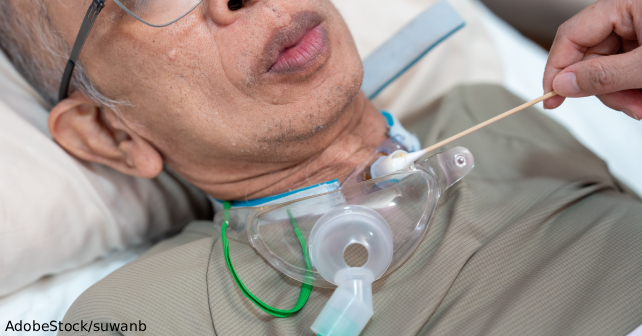
Tracheoesophageal Fistula
Tracheoesophageal fistula (TEF) is a rare but life-threatening complication commonly associated with a posteriorly positioned tracheostomy tube or cuff-related pressure necrosis to the posterior wall of the trachea, creating a communication between the posterior wall of the trachea and the anterior wall of the esophagus. In the emergency department, TEF should be suspected in patients who present with recurrent aspiration, coughing or choking during oral intake, unexplained respiratory distress, or abdominal distention from air leak into the esophagus. In mechanically ventilated patients, signs include difficulty maintaining tidal volumes, persistent air leaks despite cuff inflation, and aspiration of enteral feeds through the tracheostomy tube.
Explore This Issue
ACEP Now: February 2026 (Digital)Acute management in the emergency department focuses on airway protection, prevention of further aspiration, and stabilization while arranging definitive care. Oral intake should be immediately discontinued and any nasogastric or orogastric tubes should be removed to prevent worsening necrosis.2 The head of the bed should be elevated to reduce the risk of aspiration. The tube cuff should be positioned distal to the suspected fistula when possible. Supplemental oxygen and ventilatory support should be provided, with caution to avoid excessive airway pressures. Ultimately, these patients will require surgical repair by ENT or thoracic surgery. Prompt recognition and stabilization in the ED can significantly reduce morbidity and mortality associated with tracheoesophageal fistula.
Conclusions
The number of tracheostomies performed annually in developed countries has been estimated to be approximately 250,000.8 Therefore, it is not unusual for an emergency physician to see patients with one.
Tracheostomy-related complications remain a significant source of morbidity and mortality across care settings. While not an exhaustive list, complications such as obstruction, dislodgement, bleeding, infection, and tracheoesophageal fistula can lead to rapid clinical deterioration, and early identification, as well as a structured, systematic approach to management is essential for preventing poor outcomes. Emergency physicians must be proficient in tracheostomy anatomy, equipment, and troubleshooting techniques to ensure timely and effective management. Although rare, the rate of acute, emergent complications from tracheostomies is not insignificant. Ongoing education, standardized institutional protocols, and interdisciplinary collaboration5 among emergency medicine, surgery, respiratory therapy, and nursing are critical to improving patient outcomes.
Dr. Weis is a second-year resident in Emergency Medicine at MetroHealth/Cleveland Clinic Residency Program in Emergency Medicine.
Dr. Glauser is professor, Emergency Medicine Case Western Reserve University, and attending faculty at MetroHealth Medical Center Residency Program in Emergency Medicine.
References
- Liu Y, et al. Tracheostomy tube changes in patients with tracheostomy: A quality improvement project. Nurs Crit Care. 2023;29(6). doi:10.1111/nicc.13008
- Kumar S, Biradar K, Patra A. Tracheostomy complications: Insights from a two-year, 15-case analysis at a tertiary care facility. Indian J Otolaryngol Head Neck Surg. 2023;76(1):1470-1475. doi:10.1007/s12070-023-04272-5
- Swain SK. Complications of tracheostomy: A scoping review. Airway. 2025;8(1):1-8. doi:10.4103/arwy.arwy_32_24
- Halum SL, et al. A multi-institutional analysis of tracheotomy complications. Laryngoscope. 2012;122(1):38-45. doi:10.1002/lary.22364
- Devlin CJ, O’Bryan RS, Williams H, Capes KM, McCants T, Schoolcraft E. Improving outcomes for patients with tracheostomy through implementation of AARC clinical practice guidelines. Respir Care. 2025;70(3):243-248. doi:10.4187/respcare.12080
- Kumar VAK, Kiran NAS, Kumar VA, Ghosh A, Pal R, Reddy VV, Agrawal A. The outcome analysis and complication rates of tracheostomy tube insertion in critically ill neurosurgical patients: A data mining study. Bull Emerg Trauma. 2019;7(4):355-360. doi:10.29252/beat-070403
- Bittencourt V, Graube S, Benetti E, Fontana R, Rodrigues F, Fonseca C. Care, challenges, and difficulties of the surgical nursing team in caring for patients undergoing tracheostomy. ESTIMA Braz J Enterostomal Ther. 2024;22. doi:10.30886/estima.v22.1617_IN
- Brenner MJ, Pandian CE, Milliren E, et al. Global tracheostomy collaborative. Br J Anesthesia. 2020;125 doi.org/10.1016/j.bja.2020.04.054
Pages: 1 2 3 4 | Single Page


One Response to “Tracheostomy Complications and the Emergency Setting”
February 23, 2026
Darren HuffmanIt is important to note that if a patient had a laryngectomy, then they cannot be intubated orally.